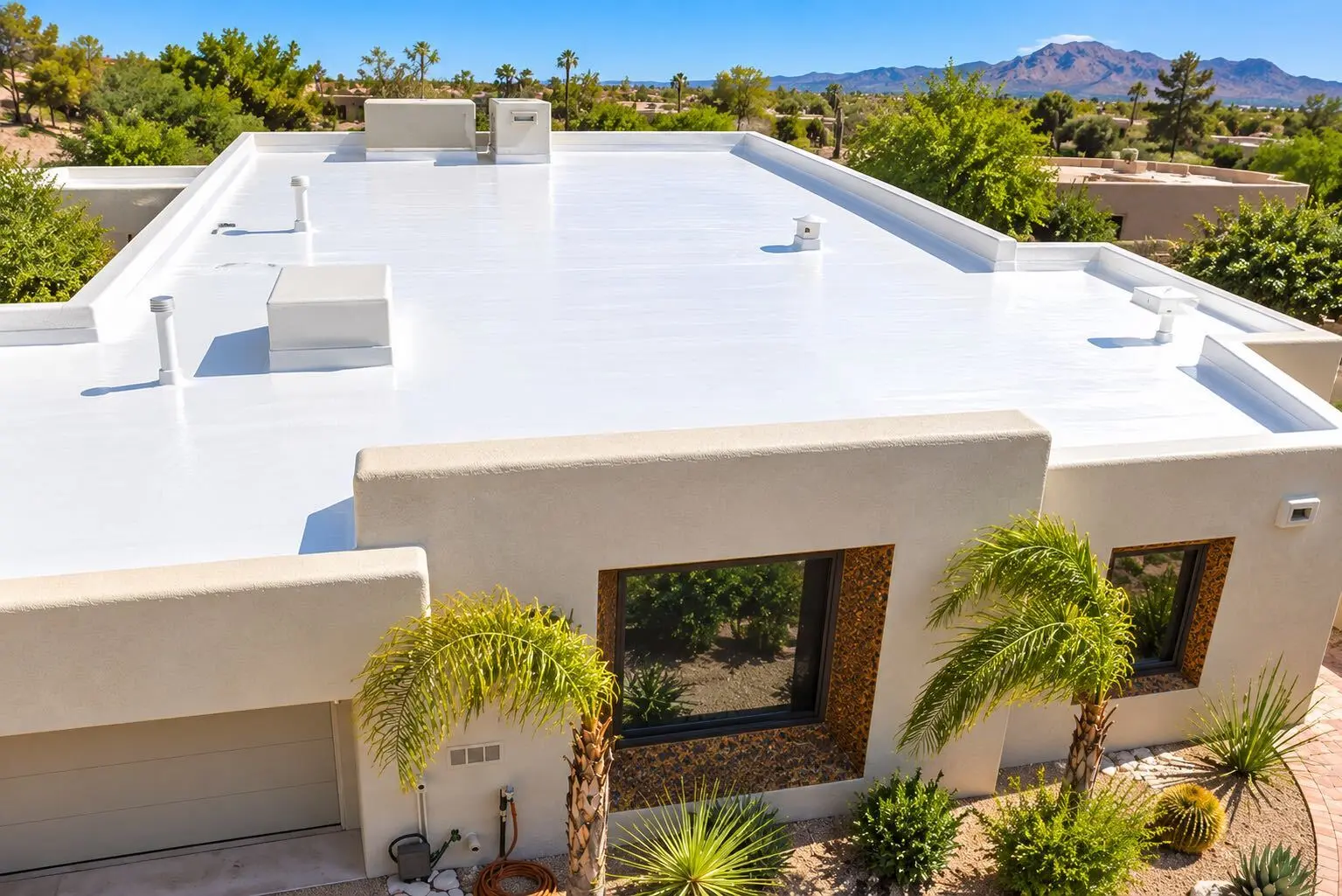
Silicone vs. Acrylic Roof Coating: Which Is Best for a Tucson Flat Roof?
The short answer: On a Tucson flat roof where water sits in low spots after a storm, silicone is usually the safer choice. It handles standing water and constant UV better than acrylic. If the roof drains well and you want a bright white surface that stays cleaner and costs less up front, an acrylic elastomeric coating can be a good fit. Before you pick either one, remember that the coating you choose now limits what can go on the roof at the next recoat.
Here is how the two compare, what decides the choice on a desert roof, and what to check before you request quotes.
Why Tucson is hard on flat roofs
Most flat and low-slope roofs in the Tucson area face three problems at once:
- Sun almost every day. Strong UV breaks down roof surfaces over time. They chalk, turn brittle and crack.
- Big temperature swings. A roof that bakes in the afternoon and cools off at night expands and contracts every day. That movement works on seams, flashing and old cracks.
- Monsoon storms. Summer storms can dump a lot of water in a short time. Any low spot, clogged scupper or sagging area holds that water after the storm passes.
A roof coating is a liquid-applied layer that cures into a seamless, flexible membrane over the existing roof. A good one reflects sunlight, seals the surface against water and slows down UV damage. What it can’t do is fix a roof that is already failing underneath. We come back to that below.
Silicone vs. acrylic at a glance
Both coatings are called “elastomeric” because they stretch and recover as the roof moves. The difference is the chemistry. Acrylic coatings are water-based. Silicone coatings are not.
| Silicone | Acrylic elastomeric | |
|---|---|---|
| Standing (ponding) water | Handles it well | Breaks down where water sits |
| UV resistance | Very high; does not chalk or turn brittle | Good, but the surface slowly erodes under intense sun and rain |
| Stays white and reflective | Picks up dirt, so it can look gray over time | Stays cleaner longer |
| Up-front material cost | Higher | Lower |
| Application weather | Can go on in cooler weather | Needs about 50°F and rising, and dry conditions to cure |
| Future recoats | Usually only silicone bonds to it | Can be recoated with acrylic or silicone |
Roofing manufacturers such as CertainTeed’s comparison of acrylics and silicone describe the same trade-offs: silicone resists ponding water and UV, while acrylic costs less but can erode under repeated sun-and-rain cycles.
When silicone is the better choice
Silicone usually makes more sense when:
- Water sits on the roof for a day or more after rain. Standing water is the main reason acrylic coatings fail early. Silicone tolerates it far better.
- The roof is truly flat, with few places for water to drain. Many older Tucson homes with parapet walls drain through a few scuppers. Low spots are common.
- You care most about waterproofing and long service life, and a slightly dirtier look over time doesn’t bother you. Most flat roofs behind parapet walls can’t be seen from the street anyway.
The trade-off is that silicone attracts dirt and dust, and Tucson has plenty of both. A dirty white roof reflects less sunlight than a clean one. Occasional cleaning helps keep it reflective.
When an acrylic elastomeric coating makes sense
Acrylic is often the practical pick when:
- The roof drains well and water does not collect after storms.
- You want the brightest white surface for the longest time to help keep the roof cooler.
- The budget matters and the roof is in good shape. Acrylic material costs less, although it may need more than one coat.
- You want to keep your options open for the next recoat, since acrylic can later be topped with acrylic or with silicone.
Acrylic coatings need warm, dry weather to cure, so they are applied when the forecast is clear. If drainage is marginal, fix it first. Adding a scupper or correcting a low spot can protect an acrylic coating from the standing water it can’t handle.
The recoat rule: today’s coating decides tomorrow’s
This part gets missed in most comparisons. A roof coating is not a one-time job. It wears down and gets recoated, and what you put on now limits what can go on later.
Roofing manufacturer Polyglass puts it bluntly in its guidance on repairing silicone-coated roofs: “The only thing that sticks to silicone is silicone.” In practice:
- Choose silicone now, and future recoats and patches will almost always be silicone too.
- Choose acrylic now, and you can recoat with acrylic again, or move to silicone later if drainage problems show up.
Neither option is wrong. Just make the choice knowing it covers the next recoat too, not only this one.
When a coating is not the right fix
A coating protects a sound roof. It does not repair a failing one. Get the roof assessed before you coat it if you see:
- Active leaks or water stains on ceilings. Find and fix the source first. A coating over an open leak just hides it.
- Soft, spongy or sagging areas that suggest wet insulation or damaged decking underneath.
- Blisters, splits or loose seams across a large part of the roof.
- Cracked parapet walls. Water often gets in through the stucco on the parapet, not the roof surface. A cracked parapet may need stucco repair before or along with the coating.
If the roof is structurally sound and the problems are surface wear, fading and minor cracks, a coating can restore the surface and extend its life for much less than a full replacement. Our page on roof coating in Tucson explains how we assess a roof and the coating options we offer.
Questions to ask before you choose a coating
Use this checklist when you talk to a contractor:
- What is on my roof now? Built-up, modified bitumen, foam or an existing coating. The existing surface affects which products will bond.
- Is there an old coating, and what type? If it is silicone, the next coat will most likely need to be silicone.
- Where does water collect, and for how long? Ask them to look at low spots, scuppers and drains after a storm if possible.
- What repairs come first? Cracks, seams, flashing and parapet walls should be addressed before any coating goes on.
- How thick will the coating be, and how many coats? Thickness has a lot to do with how long a coating lasts.
- How reflective is the product? Cool roof products are rated for solar reflectance and thermal emittance on a scale of 0 to 1, where higher values mean a cooler roof, according to the U.S. Department of Energy’s Guide to Cool Roofs.
- How should I maintain it? Ask about cleaning, inspections after monsoon season, and when to plan the next recoat.
We coat flat roofs across the Tucson area. We also offer roof coating services in Oro Valley and roof coating in Marana.
Frequently asked questions
Is elastomeric roof coating the same as acrylic?
Not exactly. “Elastomeric” means the coating stretches and recovers as the roof moves. Many elastomeric roof coatings are acrylic-based, but silicone coatings are elastomeric too. When you compare quotes, ask which chemistry the product uses.
Which roof coating lasts longest in Tucson?
On a flat roof with low spots, silicone usually outlasts acrylic because it handles standing water and UV better. On a roof that drains well, a properly applied acrylic can perform well too. Service life depends on the roof’s condition, the prep, the coating thickness and maintenance, so ask about the expected life for your specific roof.
Can you put acrylic over a silicone roof coating?
Generally, no. Acrylic doesn’t bond well to silicone. A silicone-coated roof is normally recoated with silicone.
Will a white roof coating lower my cooling bills?
A reflective coating keeps the roof surface cooler, which can reduce the heat that reaches the rooms below. How much you save depends on your insulation, roof design and the product you choose.
Can I coat a roof that is leaking?
Only after the leak is found and repaired. A coating protects a sound roof surface. It isn’t a patch for an active leak.
Get a straight answer for your roof
The best coating depends on your roof’s surface, drainage and condition, not on a one-size-fits-all rule. Goodwin & Sons Painting can look at your flat roof, point out any repairs it needs first, and recommend the coating that fits it. Call (520) 990-2445 or request a roof coating estimate.
